
- Published on

why do brightline trains kill so many people?
- Authors
- Name
- Amanda Southworth
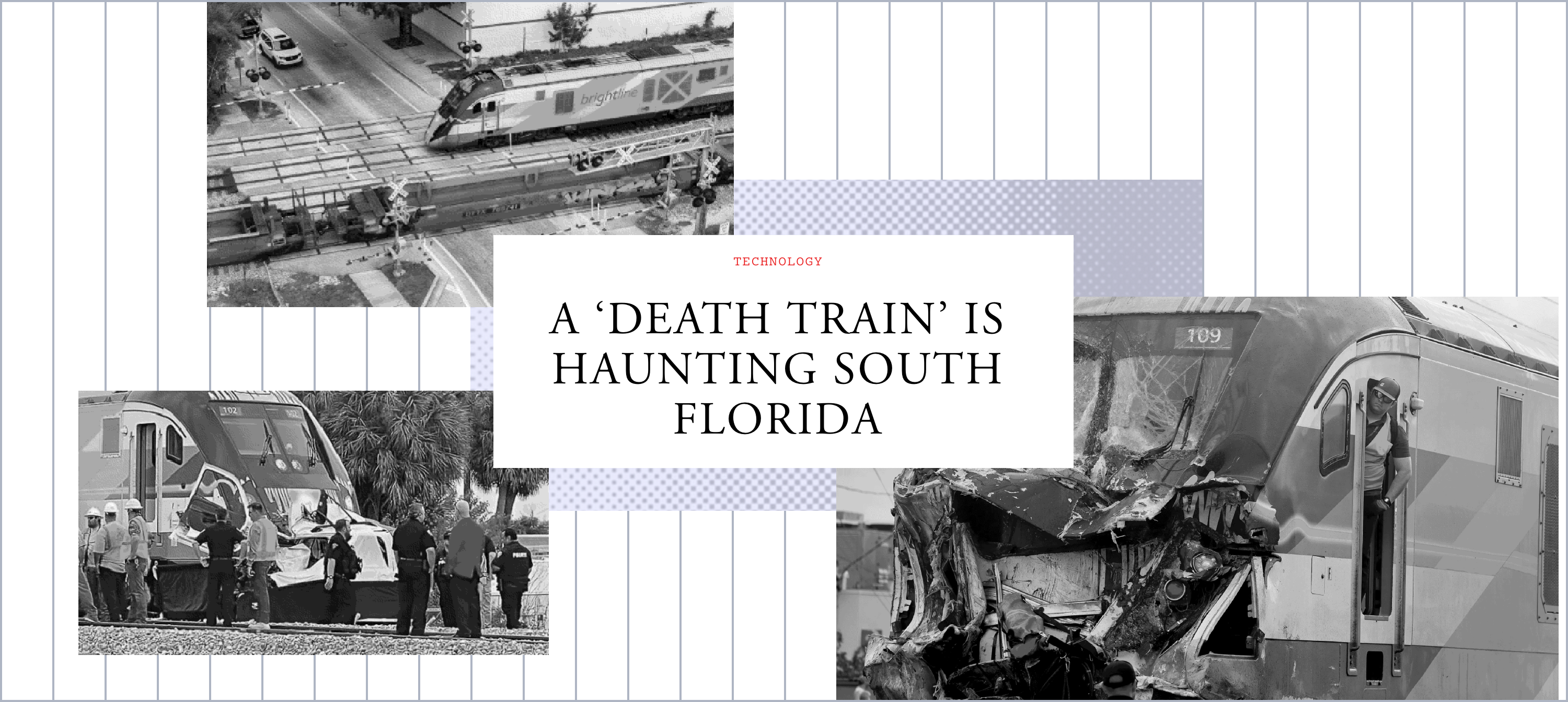
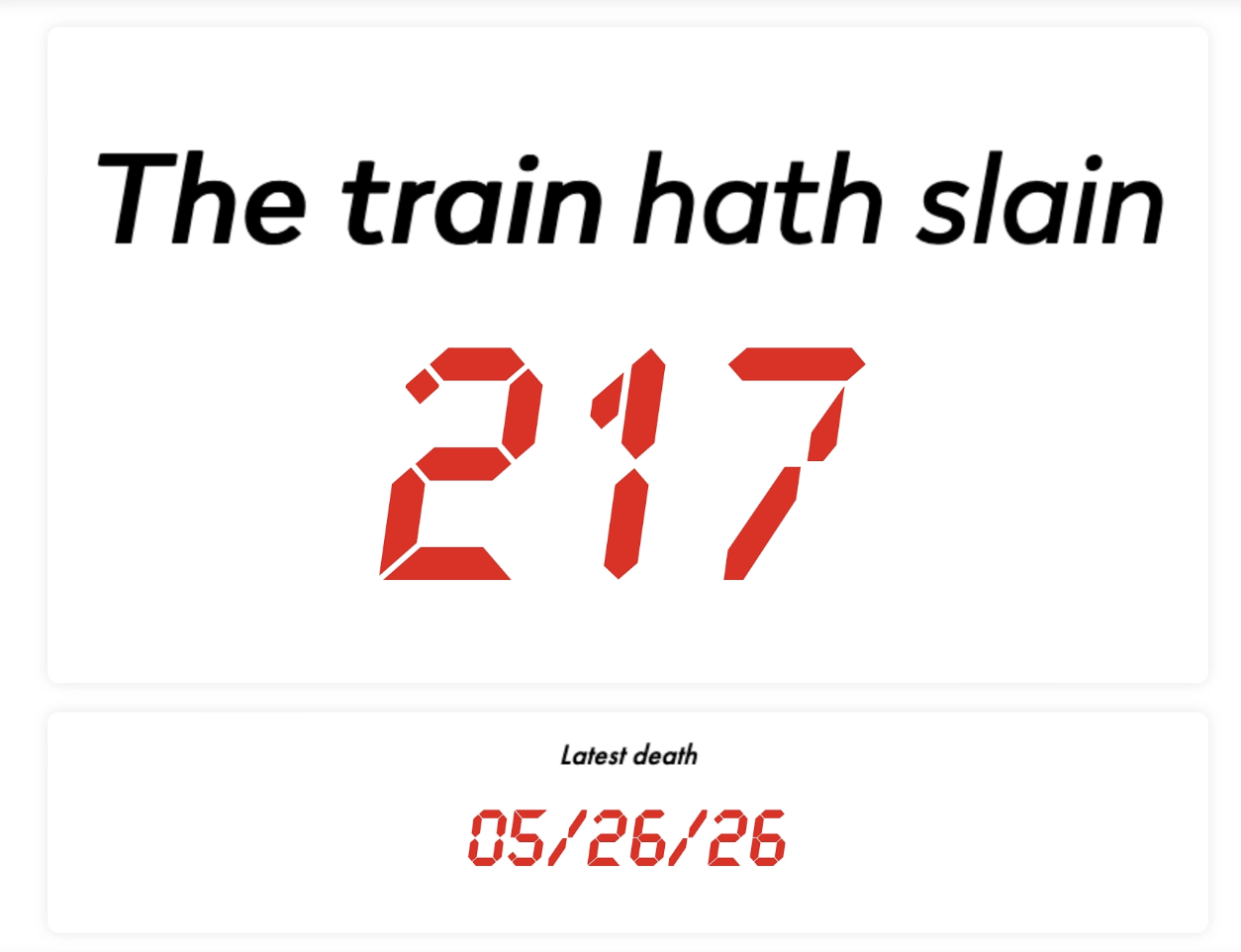
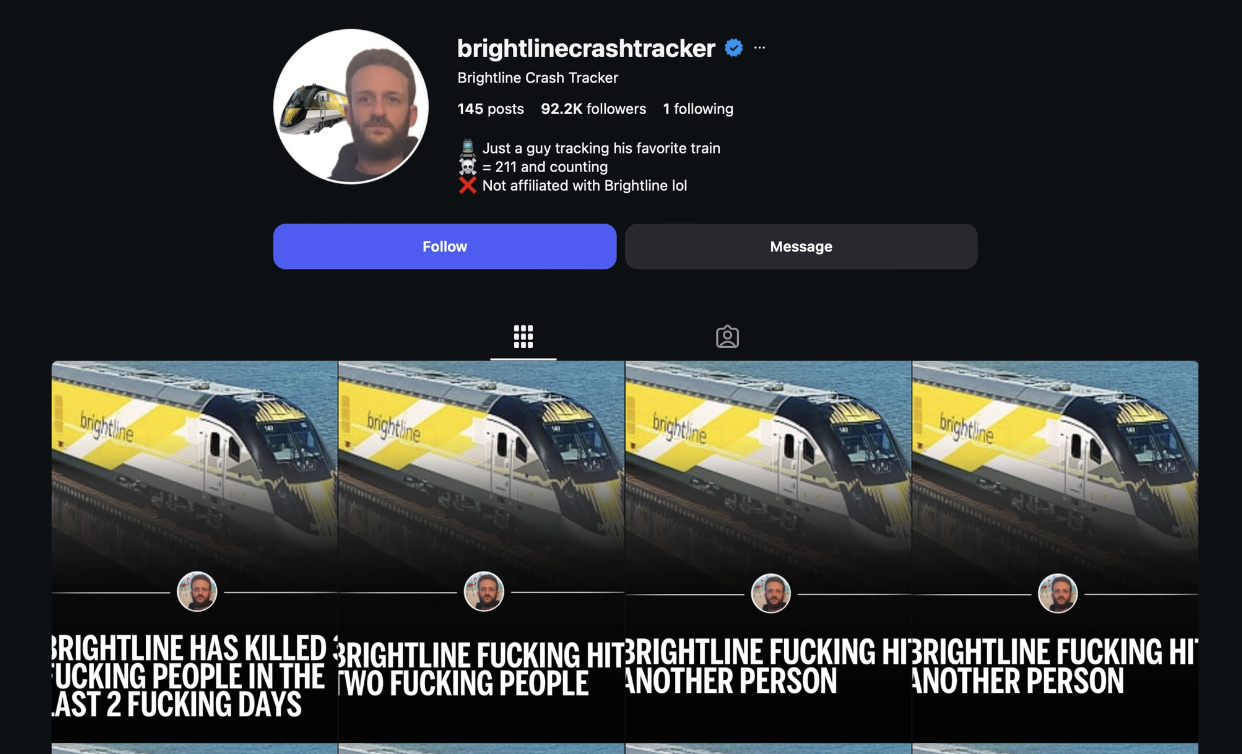
There’s one website that captures strongly the state of high-speed rail transit in America: brightlinekillcount.com, and the accompanying @brightlinecrashtracker on Instagram. It counts the number of people killed by Brightline, the US’s first privately funded high-speed rail company. It mostly exists within Florida, and was originally hailed as a major win. Compared to the bureaucratic nightmare that California’s high speed rail initiative has come to, Brightline was meant to show much much more efficient handling something like this over to a private company would be. That was the idea in 2018, when Brightline launched. Today, a person is killed by a Brightline train every 13 days its’ in service.
—
Brightline trains mostly cross on grade tracks in Florida. It also runs on pre-existing tracks that have existed in communities for years, with trains that previously ran incredibly slow.
Through the dense South Florida corridor between Miami and West Palm Beach (where most of the deaths happen), they run at up to 79 mph. It reaches 110mph farther closer to Cocoa, and only on the final farmland stretch into Orlando do they hit 125mph, where the track is fenced off and grade-separated entirely.
Trains above 125mph trigger mandatory secondary safeguards, like separation from roads, and no at-grade crossings. By keeping its speeds under 125mph along most of the route, Brightline is allowed to run at street level, without fencing or separation from pedestrians and cars. This is exactly what it does through the populated areas where people are dying.
A lot of Brightline trains go through massive population centers. Neighborhoods are sensitive to noise, which means they request no train horns. Therefore, these are quiet trains, often on the same level of the street as pedestrians and cars are crossing. They are faster than trains previously existing in the area, and may or may not have the signage and infrastructure around them to signal this. Is it any wonder then, how this could take people by surprise and cause deaths? Sudden change in environment that is not accompanied by stronger safe guards and messaging will of course, result in chaos.
So, what does Brightline have to say?
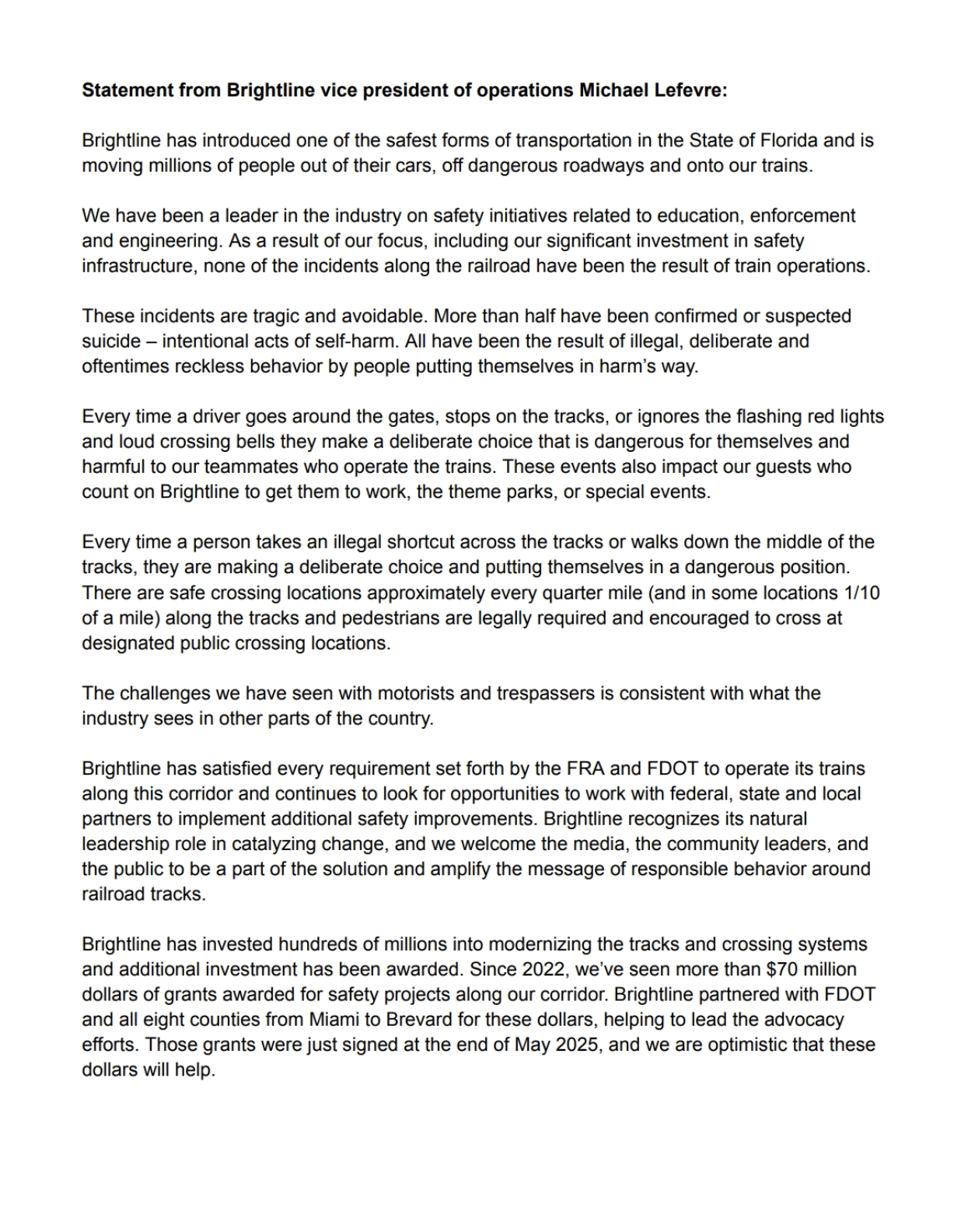
It is very easy to craft this as the end result of reckless numbers of humans making bad mistakes. That’s what this letter does: frames Brightline as a passive victim in an active environment of humans making mistakes.
But in that way, how do no other transit lines in the United States face these numbers? How is Brightline the only train line that is causing such destruction in such a small amount of time?
Brightline experiences 24.55 deaths per million miles. This is 3× Tri-Rail, another train in South Florida at 8.12 deaths. SunRail, a Central Florida train (8.04), nearly 6× Amtrak (4.20). The next-deadliest railroad nationally is California's Coaster which runs through San Diego at 16.
It is also worth remembering while reading this statement that Brightline by definition, does not want to be construed as unsafe.
Brightline saved a lot of money by re-using existing infrastructure. To paint this as the natural end result of the pre-existing infrastructure not being adequate enough with safeguards is to increase the cost of every future project. Painting the blame on humans saves money, and can save the speed of high-speed transit. They do not want to jeopardize the best version of high-speed transit that America has to offer. To brand Brightline as unsafe would be to mark almost every major high-speed rail project to the same fate.
It can be both true that high-speed rail is safer than driving, and that Brightline is the deadliest high-speed rail line. But it is a false equivalence to imagine they cannot do better. Although Brightline is comparing itself to every other train in terms of the “challenges with motorists and trespassers across the country”, it is not like the industry. It is a more dangerous vessel.
Brightline's own track proves this is an infrastructure issue. The fenced, grade-separated segment from Cocoa to Orlando has killed no one. Every one of the line's nearly 200 fatalities has happened on the older southern track, built along the century-old Florida East Coast corridor with only intermittent fencing and close to 200 at-grade crossings. Where the company built new, it built safe, and the result was zero deaths. Where it inherited old track and declined to retrofit it, people keep dying.
The difference burns through in the numbers. The death rate per million miles fell from 36 before the Orlando extension opened to 11 afterward. This wasn’t because the rest of the track got safer, but because a safe section was added to the average.
This is similar to SUV’s. Because SUVs have more weight, and often higher grills that strike pedestrians on the chest, causing them to roll under the vehicle and get run over, than lower, which enables the pedestrian to roll over the top, avoiding the wheels. SUVs make the environment more dangerous for pedestrians, other smaller cars, and the streets. Simply put, SUVs are dangerous because they are incorrectly built for the environment they are in. Brightline is the same.
Now, to address the suicide claims: It is highly easy to re-write the state of mind on intentions of someone who is dead, primarily because they are not able to state their own case.
Brightline's claim that the majority of these deaths are suicides, or careless people, is untrue compared to what the medical examiner found. When the Miami Herald and WLRN reviewed all 182 deaths against medical examiner records at the time of their story, only 41% of them were ruled suicides. 91 deaths (50%) were accidental, 10 deaths were undetermined.
In 2020, Brightline claimed 75% of deaths were 'the result of suicide or drugs'. They reached this number by folding suicides together with any case where a person had a substance in their system. It nearly doubled the represented share of suicides by merging two categories that aren't the same thing.
Although Brightline is different in terms of speed, I don’t know that there would be empirical evidence for higher rates of intentional acts of suicide. If people are going to take their lives through train, I don’t imagine a speed increase would be enough to make up for the statistical anomaly of incidents. Now, this is also nuanced. Increasing accessibility to forms of harm can decrease the amount of time that it takes someone who is suicidal to make the decision to take their life. The first recorded case of a Brightline death was an 18 year old girl who had bipolar and was going through a manic episode. But, this is another reason, if any, the trains should be more inaccessible from the general populace.
I must also say, it is quite a convenient excuse for Brightline to not admit that safety considerations have not been thoroughly implemented, and instead to blame it on suicide. Suicide, therefore, is inevitable and Brightline is simply the vehicle by which it happens. It is the form on which it happens to, not the form that causes the incident. By framing the train in its’ environment passively, we do not enable it to take responsibility for its’ actions. Instead, we place the word of “accidents” as a way to avoid making systemic change that reduces the chance of accidents.
It can both be true that there is accidents that happen, but that we can also make changes within our environment to make accidents less likely. We have people wear harnesses on roofs. We salt the icy sidewalks and roads to reduce slipping. But this happens when we recognize that the environment around us contributes to the circumstances that cause excess risk of harm.
It is much less generous to Brightline to say that it is a relatively new, and dangerous vehicle that acts differently in a space where it didn’t. When danger is more accessible, fast, and blends into an environment where it wasn’t previously known, it is more likely. Simply put: blaming this entirely on people who are suicidal or prone to accidents doesn’t solve the problem, it creates scapegoats who often do not survive to defend themselves.
They become, not people alive who had a life worth building safer systems to protect, but instead - a caricature of their final moments ever. A reverse post-mortem, made by a public who has no attachment to these strangers who were beloved people. A train, an accident. A person who’s death will be reduced to a split-second judgement from people who will never think of the person who died again.